
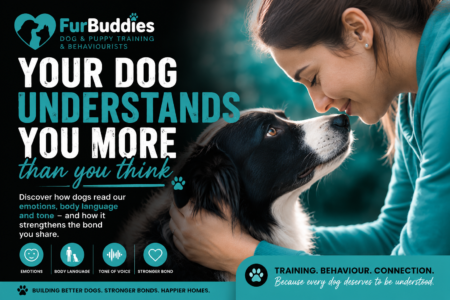
The Canine Connection: How Dogs Understand Human Emotions & Body Language
Have you ever noticed your dog cuddling closer when you’re upset, becoming excited when you’re happy, or appearing anxious when you’re stressed?
It’s not your imagination. Dogs are remarkably skilled at reading human emotions and body language. Thousands of years of living alongside humans have shaped dogs into emotional experts capable of interpreting our facial expressions, posture, tone of voice, and even subtle changes in scent. Research increasingly shows that dogs are deeply connected to our emotional world.
At FurBuddies Dog & Puppy Training & Behaviourists, we see this emotional connection every day during puppy classes, behaviour consultations, and training sessions across Cape Town. Understanding how dogs perceive us can dramatically improve communication, strengthen your bond, and help prevent behavioural problems before they start.
Dogs Are Masters of Human Body Language
Dogs rely heavily on non-verbal communication. While humans focus on spoken words, dogs pay close attention to:
- Facial expressions
- Eye contact
- Posture
- Movement
- Energy levels
- Hand gestures
- Vocal tone
Studies show that dogs can distinguish between happy, angry, fearful, and sad expressions in humans.
This is one reason why your dog often reacts before you even say a word.
If your body becomes tense, your dog notices.
If your movements are calm and relaxed, your dog notices that too.
Dogs are constantly gathering information from us, which is why inconsistent body language can confuse training and create anxiety.
Your Dog Understands More Than You Think
Dogs don’t just respond to commands — they respond to emotional context.
Research suggests dogs process both the words we say and the emotional tone behind them.
That means:
- A cheerful “good dog!” feels rewarding
- A frustrated tone can create stress or uncertainty
- Calm, confident communication builds trust
Many behavioural issues actually stem from accidental emotional signalling from owners. Nervous energy on walks, tension around strangers, or frustration during training can all influence a dog’s behaviour.
At FurBuddies, one of our key training principles is helping owners become clearer communicators so dogs feel safe, confident, and understood.
Dogs Can Sense Human Stress & Anxiety
One of the most fascinating discoveries in canine science is emotional contagion — the ability for dogs to “catch” human emotions.
Research has shown that dogs’ stress hormone levels can rise when their owners are stressed. Dogs may also mirror our emotional state through:
- Increased anxiety
- Hypervigilance
- Restlessness
- Clingy behaviour
- Withdrawal
Dogs are incredibly observant and sensitive to:
- Changes in breathing
- Muscle tension
- Facial expressions
- Voice changes
- Body odours linked to emotional states
This sensitivity is one reason dogs make such incredible emotional support animals, therapy dogs, and assistance dogs.
Why Positive Training Matters
Because dogs are so emotionally connected to humans, harsh punishment-based training can damage trust and create fear.
Modern behavioural science strongly supports reward-based training methods that focus on:
- Positive reinforcement
- Clear communication
- Confidence building
- Emotional safety
- Trust and cooperation
At FurBuddies Puppy Training Classes, we use humane, science-based methods designed to strengthen the human-canine relationship while building real-life obedience and emotional resilience.
Dogs learn best when they feel secure, understood, and motivated.
The Human-Dog Bond Is Scientifically Real
The connection between humans and dogs goes beyond companionship.
Studies show that when humans and dogs interact positively, both release oxytocin — often called the “bonding hormone” or “love hormone.”
This mutual biological response strengthens attachment and explains why dogs often feel like true family members.
Simply making eye contact, petting your dog, or spending quality time together can reinforce this emotional bond.
Signs Your Dog Is Reading Your Emotions
Your dog may be responding to your emotional state if they:
- Sit closer when you’re sad
- Become excited when you’re happy
- Appear anxious when you’re stressed
- Watch your face closely
- React to tension between people
- Calm down when you relax
- Avoid situations where you appear fearful
Dogs constantly look to humans for emotional guidance and reassurance.
How to Improve Communication With Your Dog
If you want a calmer, more responsive, and emotionally balanced dog:
Stay Calm & Consistent
Dogs respond best to predictable communication and calm leadership.
Use Clear Body Language
Avoid mixed signals during training and everyday interactions.
Reward Desired Behaviour
Positive reinforcement creates confidence and stronger learning.
Be Aware of Your Own Energy
Your emotional state affects your dog more than you may realise.
Build Trust Daily
Short positive interactions strengthen your bond over time.
Understand your dogs visual feedback, their reaction to patting for example

Final Thoughts
Dogs are extraordinary emotional companions. Their ability to understand human body language, tone, facial expressions, and emotions is one of the reasons the human-dog bond is so powerful.
The more we understand how dogs interpret us, the better we can communicate, train, and build lifelong relationships with them.
At FurBuddies Dog & Puppy Training & Behaviourists, we believe successful training starts with understanding your dog emotionally — not just teaching commands.
When communication improves, behaviour improves too.