
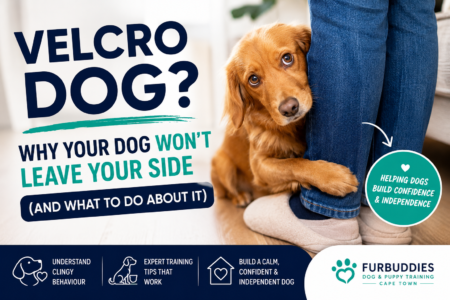
Velcro Dogs Explained: Why Your Dog Won’t Leave Your Side (And What To Do About It)
🐶 Introduction
Does your dog follow you from room to room—even to the bathroom? You might be living with what’s commonly called a Velcro dog.
While it can feel flattering (and sometimes adorable), constant attachment can also signal deeper behavioural issues that, if ignored, may develop into separation anxiety.
At FurBuddies Dog & Puppy Training in Cape Town, we help dog owners turn clingy behaviour into calm confidence—without damaging your bond.
🧲 What Is a Velcro Dog?
A Velcro dog is a dog that sticks closely to their owner at all times, often showing distress when separated.
Common signs include:
- Following you everywhere in the house
- Always needing physical contact
- Waiting outside doors (especially bathrooms 👀)
- Becoming anxious when you leave
- Struggling to settle independently
🧠 Why Do Dogs Become Velcro Dogs?
1. Breed Traits
Some breeds are naturally more people-oriented:
- Border Collies
- Labradors
- Vizslas (often called the ultimate Velcro dogs)
2. Reinforced Behaviour
If your dog gets attention every time they follow you, you may be unintentionally rewarding clinginess.
3. Lack of Confidence
Dogs that haven’t been taught independence often rely heavily on their humans for security.
4. Routine Dependency
Dogs thrive on routine. If they’re used to constant companionship, any change can trigger anxiety.
5. Early Signs of Separation Anxiety
Velcro behaviour can be the starting point of a more serious issue.
⚠️ When Is It a Problem?
Not all Velcro dogs are unhealthy—but it becomes a concern when:
- Your dog panics when left alone
- Destructive behaviour occurs
- Excessive barking or whining starts
- They cannot relax without you nearby
🎯 How To Help a Velcro Dog Become More Independent
🐾 1. Teach “Settle” and Place Training
Create a designated calm space where your dog learns to relax without constant contact.
🐾 2. Reward Independence
Instead of rewarding following behaviour, reward your dog when they choose to rest away from you.
🐾 3. Build Alone Time Gradually
Start small:
- Step into another room
- Increase duration slowly
- Keep departures low-key
🐾 4. Avoid Over-Attachment Habits
- Don’t constantly engage
- Avoid emotional greetings and goodbyes
🐾 5. Mental Stimulation
A mentally fulfilled dog is far less likely to cling:
- Puzzle toys
- Training games
- Structured walks
🧑🏫 Expert Tip from FurBuddies
Clinginess is often misunderstood as love—but in many cases, it’s actually dependency.
Your goal isn’t to push your dog away—it’s to build a dog that chooses calm independence while still having a strong bond with you.
📍 Velcro Dogs in Cape Town: Why It’s Common
In areas like Table View and Blouberg, many dogs:
- Spend long hours with their owners (remote work)
- Have limited structured training
- Get inconsistent independence exposure
This creates the perfect environment for Velcro behaviour to develop.
🚀 How FurBuddies Can Help
At FurBuddies, we specialise in:
- Puppy training and socialisation
- Confidence-building exercises
- Behaviour modification for clingy and anxious dogs
We don’t just train dogs—we coach owners to create calm, balanced companions.
👉 Struggling with a Velcro dog?
👉 Want a calm, independent, confident companion?
Join our Puppy Training & Behaviour Programs today:
🔗 https://www.furbuddies.co.za/services/dog-puppy-training/
❓ FAQ’s Section
What is a Velcro dog?
A Velcro dog is a dog that follows their owner constantly and struggles with independence.
Is a Velcro dog a bad thing?
Not always—but it can lead to separation anxiety if not managed properly.
How do I stop my dog from following me everywhere?
Teach independence through training, reward calm behaviour, and gradually build tolerance to separation.
What breeds are Velcro dogs?
Breeds like Vizslas, Labradors, and Border Collies are commonly more attached to their owners.