
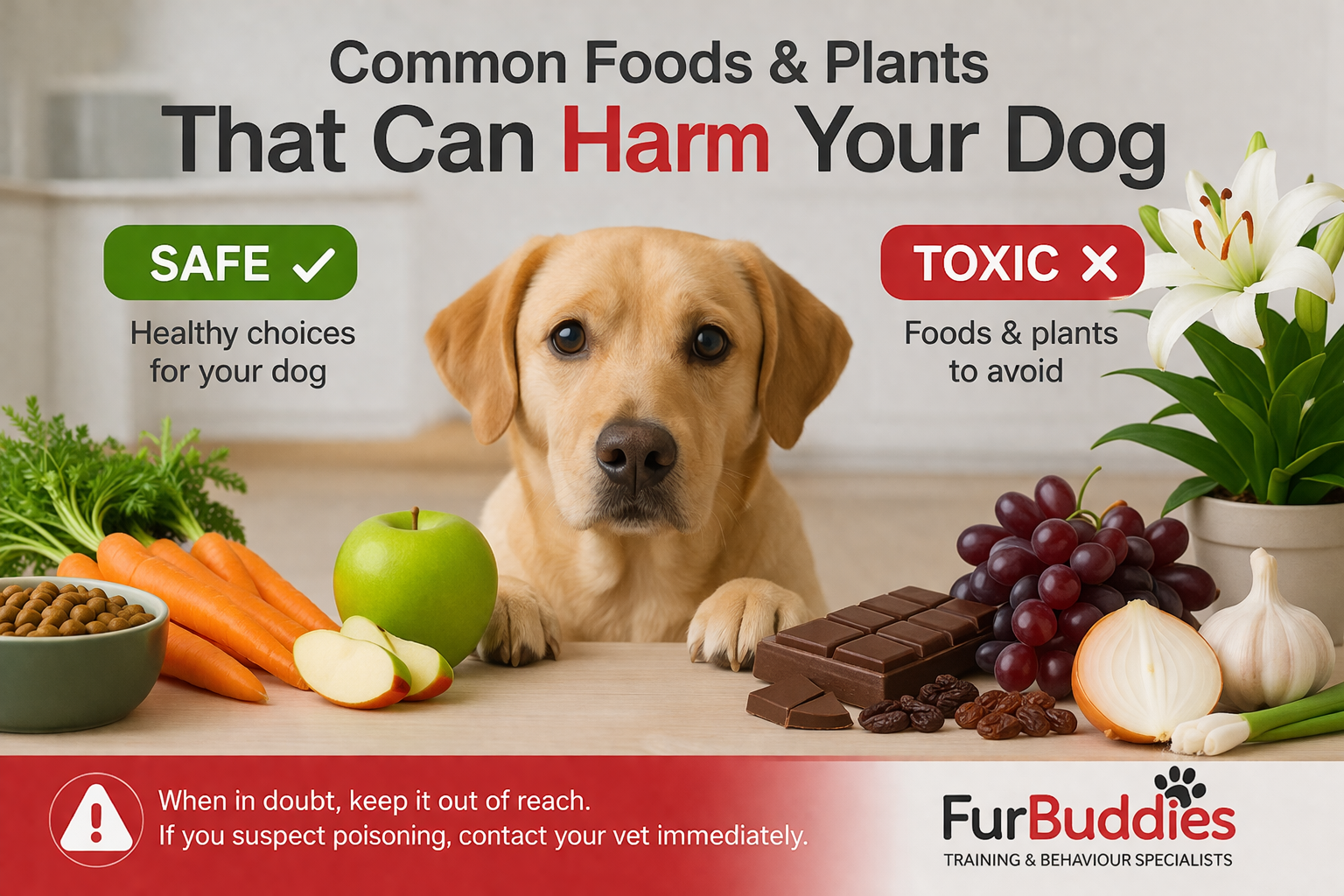
Plants and Foods That Are Toxic to Dogs
A Must-Know Guide for Every Dog Owner
As loving dog owners, we want to keep our pups safe—but many everyday foods and common garden or household plants can pose serious health risks to dogs.
At FurBuddies, we often see behavioural and health issues linked to accidental ingestion of toxic substances. Understanding what’s dangerous is one of the simplest and most powerful ways to protect your dog.
In this article:
🚨 Why Dogs Get Into Toxic Things
Dogs explore the world with their mouths. Puppies, in particular, chew out of curiosity, boredom, or teething discomfort. Even well-trained adult dogs can be tempted by smells, textures, or stress.
Unfortunately, many toxic substances are:
- Easily accessible in homes and gardens
- Smell appealing to dogs
- Harmless to humans but dangerous to pets
🍫 Common Foods That Are Toxic to Dogs
Some of the most dangerous foods are everyday household items.
❌ Foods to Avoid Completely:
- Chocolate – Contains theobromine, which can cause vomiting, seizures, and heart issues
- Grapes & raisins – Can lead to sudden kidney failure, even in small amounts
- Onions, garlic, chives – Damage red blood cells and can cause anaemia
- Xylitol (artificial sweetener) – Found in gum and sweets and sugar free peanut butter; can cause liver failure
- Alcohol – Extremely dangerous, even in small quantities
- Avocado – Can cause digestive upset and toxicity
- Coffee & caffeine – Overstimulates the nervous system
⚠️ Other Risky Foods:
- Macadamia nuts
- Raw dough (can expand in the stomach)
- Fruit pits and seeds
- Green potatoes and tomatoes
- Cooked bones (choking/blockage risk)
🌿 Plants That Are Toxic to Dogs
Many popular houseplants and garden plants can be harmful—even deadly.
❌ Highly Toxic Plants:
- Oleander – Can affect the heart and be fatal
- Lily of the valley – Causes heart rhythm disturbances
- Foxglove – Contains cardiac toxins
- Sago palm – Extremely toxic, can cause liver failure
- Azaleas & rhododendrons – Affect the nervous system and heart
⚠️ Common Garden & Household Plants:
- Daffodils (especially bulbs)
- Tulips
- Ivy
- Hydrangeas
- Wisteria
- Mistletoe
- Nightshade
- Aloe vera
- Lantana (very common in South Africa)
Even small amounts can cause symptoms ranging from mild stomach upset to severe poisoning depending on the plant and quantity consumed .
⚠️ Signs Your Dog May Have Been Poisoned
If your dog has ingested something toxic, symptoms may include:
- Vomiting or diarrhoea
- Drooling or foaming at the mouth
- Lethargy or weakness
- Tremors or seizures
- Loss of appetite
- Difficulty breathing
In severe cases, poisoning can lead to organ failure or death.
👉 If you suspect poisoning, contact your vet immediately. Do not wait.
🛡️ How to Keep Your Dog Safe
At Home:
- Keep human food out of reach
- Check ingredients before sharing treats
- Avoid leaving food unattended
In the Garden:
- Research plants before planting
- Remove or fence off toxic plants
- Supervise puppies outdoors
During Training:
This is where professional guidance makes a huge difference.
At FurBuddies, we help dogs learn:
- Reliable “leave it” and “drop it” commands
- Impulse control around food and objects
- Calm, structured behaviour in stimulating environments
🐾 How FurBuddies Can Help
Preventing poisoning isn’t just about awareness—it’s about behaviour.
Our services are designed to:
- Build strong obedience foundations in puppies
- Address scavenging and chewing behaviours
- Improve your dog’s decision-making and impulse control
Whether through puppy training classes or behavioural consultations, we help you create a safer environment and a more reliable dog.
❤️ Final Thoughts
Many toxic foods and plants are surprisingly common—but with the right knowledge and training, most accidents are preventable.
Your dog depends on you for safety. A little awareness goes a long way.
📞 Need Help With Your Dog’s Behaviour?
If your dog struggles with chewing, scavenging, or impulse control, FurBuddies is here to help.
👉 Visit Click to learn how we can help to learn more about our training and behavioural services or click the WhatsApp button on the page.
Disclaimer: This post is provided for information only. If you suspect poisoning, immediately contact your vet.