
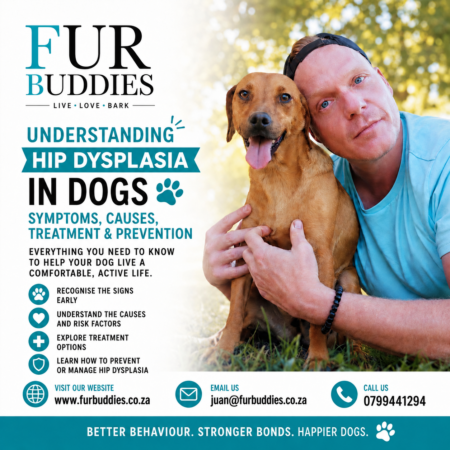
Understanding Hip Dysplasia in Dogs: Symptoms, Causes, Treatment & Prevention
A Guide for Dog Owners by FurBuddies
Hip dysplasia is one of the most common orthopaedic conditions affecting dogs, particularly medium, large, and giant breeds. While the diagnosis can sound alarming, understanding what hip dysplasia is, how it develops, and how it can be managed can help owners make informed decisions that significantly improve their dog’s quality of life.
At FurBuddies, we believe that education is one of the most powerful tools in responsible dog ownership. This guide explains everything you need to know about canine hip dysplasia, from early warning signs to treatment options and prevention strategies.
What Is Hip Dysplasia?
Hip dysplasia is a developmental condition where a dog’s hip joint does not form correctly. A healthy hip functions as a “ball-and-socket” joint, where the ball (femoral head) fits snugly into the socket (acetabulum), allowing smooth and pain-free movement.
In dogs with hip dysplasia, the ball and socket do not fit together properly. Instead of moving smoothly, the joint becomes loose and unstable, causing abnormal wear and tear over time. This eventually leads to inflammation, pain, arthritis, and reduced mobility.
How Does Hip Dysplasia Develop?
Hip dysplasia is primarily an inherited condition, but genetics are not the only factor involved.
Several factors can influence whether a genetically predisposed dog develops clinical signs:
Genetics
Dogs inherit hip structure from their parents. Responsible breeders screen breeding dogs to reduce the risk of passing on the condition.
Rapid Growth
Large and giant breed puppies that grow too quickly may place excessive stress on developing joints.
Excessive Weight
Being overweight increases pressure on the hip joints and can worsen existing joint instability.
Improper Nutrition
Overfeeding, excessive calorie intake, and incorrect calcium-to-phosphorus ratios during growth may contribute to skeletal abnormalities.
Exercise Factors
Both excessive high-impact exercise and insufficient muscle-building exercise during puppyhood may influence joint development.
Which Dog Breeds Are Most At Risk?
While any dog can develop hip dysplasia, certain breeds have a significantly higher risk, including:
- Labrador Retrievers
- Golden Retrievers
- German Shepherds
- Rottweilers
- Boerboels
- Great Danes
- Saint Bernards
- Bernese Mountain Dogs
- Newfoundland Dogs
Mixed-breed dogs can also be affected, especially when they have ancestry from larger breeds.
Common Signs and Symptoms
Symptoms can appear in puppies as young as four to six months of age or may only become noticeable later in life when arthritis develops.
Early Signs
- Difficulty standing up
- Reluctance to climb stairs
- Reduced willingness to run or play
- Stiffness after exercise
- Bunny-hopping when running
- Swaying gait
- Reduced endurance during walks
Advanced Signs
- Limping in the hind legs
- Pain when hips are touched
- Loss of thigh muscle mass
- Difficulty jumping into vehicles
- Reduced mobility
- Chronic arthritis
Many owners mistakenly believe these signs are simply part of aging, when they may actually indicate joint disease.
How Is Hip Dysplasia Diagnosed?
If your veterinarian suspects hip dysplasia, they will typically perform:
Physical Examination
Your vet will assess:
- Joint looseness
- Pain response
- Range of motion
- Muscle development
X-rays (Radiographs)
X-rays remain the gold standard for diagnosing hip dysplasia and determining severity. They allow veterinarians to evaluate the shape of the hip joint and identify arthritic changes.
OFA Hip Grading
The Orthopedic Foundation for Animals (OFA) grades hips as:
- Excellent
- Good
- Fair
- Borderline
- Mild Dysplasia
- Moderate Dysplasia
- Severe Dysplasia
These evaluations help breeders make informed breeding decisions and assist veterinarians in treatment planning.
Treatment Options
There is no single cure for hip dysplasia. Treatment depends on the dog’s age, severity of the condition, and overall health.
Conservative (Non-Surgical) Management
Many dogs live happy, active lives with conservative treatment.
Weight Management
Maintaining a lean body condition is one of the most effective ways to reduce pain and slow disease progression.
Controlled Exercise
Regular low-impact activities help maintain muscle strength and support the joint.
Recommended activities include:
- Walking
- Swimming
- Hydrotherapy
- Controlled conditioning exercises
Swimming is particularly beneficial because it builds muscle without placing stress on the joints.
Physiotherapy
Canine physiotherapy can improve:
- Mobility
- Muscle strength
- Joint stability
- Overall comfort
Medication
Veterinarians may prescribe:
- Anti-inflammatory medications
- Pain relief medication
- Joint support supplements
Glucosamine and chondroitin are commonly used as part of long-term management plans.
Surgical Treatment Options
For severe cases, surgery may provide the best long-term outcome.
Triple Pelvic Osteotomy (TPO)
Typically performed in young dogs before significant arthritis develops. The pelvis is surgically repositioned to improve joint stability.
Femoral Head Ostectomy (FHO)
The femoral head is removed, allowing the body to form a “false joint” that reduces pain.
Total Hip Replacement (THR)
Considered the most effective surgical treatment. The damaged joint is replaced with prosthetic components, often restoring near-normal function.
Can Hip Dysplasia Be Prevented?
Not all cases can be prevented, but the risk can be reduced.
Choose a Responsible Breeder
Ask for:
- OFA hip scores
- Hip screening certificates
- Health testing records
Responsible breeding remains one of the most effective ways to reduce hip dysplasia prevalence.
Feed Large Breed Puppies Correctly
Large breed puppies should receive nutrition specifically formulated to support controlled growth.
Avoid Overfeeding
Keeping puppies lean helps reduce stress on developing joints.
Exercise Appropriately
Avoid excessive repetitive high-impact activities such as:
- Repeated jumping
- Excessive stair climbing
- Long-distance running in young puppies
Instead, focus on age-appropriate exercise and socialisation.
Living With a Dog That Has Hip Dysplasia
A diagnosis of hip dysplasia is not the end of an active, happy life.
Many dogs continue to enjoy:
- Walks
- Swimming
- Training sessions
- Family adventures
- Social activities
With early diagnosis, appropriate exercise, weight management, veterinary care, and rehabilitation support, many dogs maintain an excellent quality of life for years.
Final Thoughts
Hip dysplasia is one of the most common orthopaedic conditions seen in dogs, but it is also one of the most manageable when detected early. Understanding the signs, choosing breeders carefully, maintaining a healthy weight, and providing appropriate exercise can make a significant difference to your dog’s long-term comfort and mobility.
At FurBuddies, we encourage every dog owner to learn about breed-specific health concerns before choosing a puppy and to seek veterinary advice whenever changes in mobility or activity levels are noticed.
Because every dog deserves the opportunity to live a healthy, active, and pain-free life. Prevention is always better than cure!