
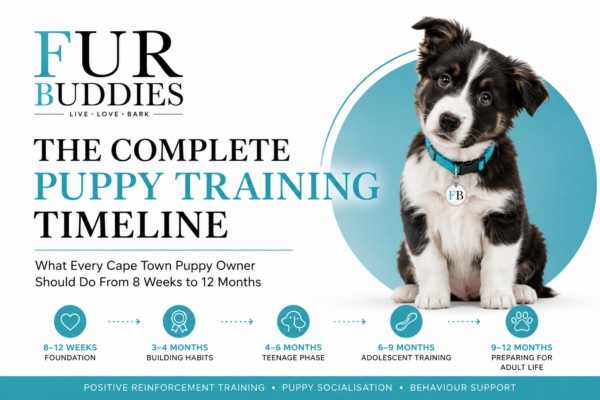
The Complete Puppy Training Timeline: What Every Cape Town Puppy Owner Should Do From 8 Weeks to 12 Months
By FurBuddies Dog Training & Behaviour Specialists
Bringing home a new puppy is exciting, but many dog owners quickly discover that raising a well-behaved dog requires more than love and good intentions.
The first year of your puppy’s life is the most important developmental period they will ever experience. The behaviours, habits, confidence and social skills developed during this time will influence how your dog behaves for years to come.
At FurBuddies, we help puppy owners throughout Cape Town raise calm, confident and well-mannered dogs using force-free, positive reinforcement training methods.
This guide explains exactly what you should focus on at every stage of your puppy’s development.
Why Early Puppy Training Matters
Research and experience consistently show that puppies are most receptive to learning and socialisation during their first few months of life.
Proper puppy training helps prevent:
- Excessive barking
- Jumping up
- Pulling on the lead
- Fearfulness
- Anxiety
- Aggression
- Poor recall
- Destructive behaviour
The earlier you start, the easier it is to prevent unwanted behaviours before they become habits.
8–12 Weeks: The Foundation Stage
This is one of the most important developmental periods in your puppy’s life.
Focus Areas
Socialisation
Introduce your puppy to:
- Different people
- Children
- Friendly vaccinated dogs
- Household sounds
- Traffic noises
- Different surfaces
Positive experiences now help prevent fear later.
Name Recognition
Your puppy should quickly learn:
- Their name
- Eye contact
- Responding when called
Toilet Training
Take your puppy outside:
- After sleeping
- After eating
- After play sessions
Consistency is critical.
Bite Inhibition
Puppies naturally explore with their mouths.
Teach:
- Gentle play
- Appropriate chew toys
- Calm redirection
3–4 Months: Building Good Habits
At this age your puppy becomes more confident and curious.
Essential Skills
Sit
One of the first commands every puppy should learn.
Down
Useful for calming excited puppies.
Wait
Builds patience and impulse control.
Recall
Teaching your puppy to come when called can be life-saving.
Loose Lead Walking
Prevent lead pulling before it becomes a habit.
4–6 Months: The Teenage Phase Begins
Many owners think their puppy is fully trained by now.
This is often where challenges begin.
Common Problems
- Selective hearing
- Increased independence
- Pulling on walks
- Jumping on visitors
- Excitement around other dogs
Consistency becomes more important than ever.
Continue Socialisation
Your puppy should continue experiencing:
- New environments
- Dog-friendly locations
- Car rides
- Vet visits
- Grooming sessions
6–9 Months: Adolescent Dog Training
Many dogs enter a challenging teenage phase.
You may notice:
- Ignoring commands
- Increased energy
- Testing boundaries
- Frustration around distractions
This stage requires patience and structure.
Focus On
- Reliable recall
- Lead walking
- Calm greetings
- Settling on a mat
- Focus around distractions
9–12 Months: Preparing for Adult Life
Your puppy is beginning to mature physically and mentally.
Real-World Training
Practice in:
- Parks
- Beaches
- Shopping areas
- Outdoor cafés
- Family gatherings
Training should work everywhere, not just at home.
Build Reliability
Continue reinforcing:
- Recall
- Stay
- Loose lead walking
- Calm behaviour around people and dogs
Common Puppy Training Mistakes
Waiting Too Long To Start
Many owners wait until problems develop.
Early training is easier than behaviour modification.
Inconsistent Rules
If jumping on people is allowed sometimes, your puppy becomes confused.
Punishment-Based Methods
Modern behavioural science supports reward-based training that builds trust and confidence.
Insufficient Socialisation
Missing the early socialisation window can contribute to fear-based behaviours later in life.
When Should You Join Puppy Training Classes?
Professional puppy classes provide:
- Safe socialisation
- Structured learning
- Expert guidance
- Confidence building
- Owner education
Many behavioural problems can be prevented when owners receive professional support early.
How FurBuddies Helps Cape Town Puppy Owners
At FurBuddies, we offer:
- Puppy Training Classes
- Puppy Socialisation
- Private Puppy Training
- Dog Behaviour Consultations
- Positive Reinforcement Training
- Adolescent Dog Training
We work with puppy owners throughout Cape Town to build calm, confident and well-mannered dogs using proven, reward-based methods.
Final Thoughts
The first year of your puppy’s life shapes the dog they become.
Investing time in training, socialisation and positive experiences today can prevent years of behavioural challenges in the future.
Ready to Give Your Puppy the Best Start?
Contact FurBuddies Dog Training & Behaviour Specialists today and discover how professional guidance can help your puppy become the companion you’ve always wanted.