
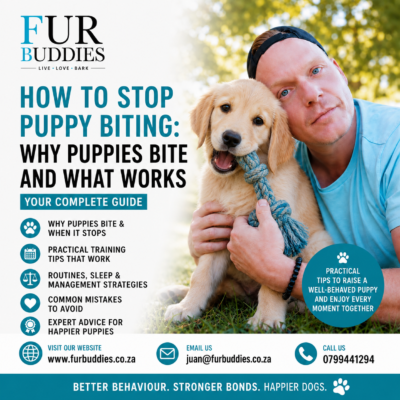
How to Stop Puppy Biting: Why Puppies Bite and What Actually Works
Struggling with puppy biting? Learn why puppies bite, when it stops, and the most effective positive training methods to stop nipping and chewing. Expert advice from FurBuddies
Puppy biting is one of the most common challenges new dog owners face. If your puppy seems determined to chew your hands, feet, clothes, furniture, or anything else within reach, you’re certainly not alone.
The good news is that puppy biting is a completely normal part of development. The even better news? With the right training and consistency, you can teach your puppy to use their mouth appropriately and grow into a well-mannered adult dog.
At FurBuddies, we’ve helped hundreds of puppy owners navigate this stage with confidence. In this guide, we’ll explain why puppies bite, how to respond correctly, what mistakes to avoid, and when you should seek professional help.
Why Do Puppies Bite?
Puppies explore the world with their mouths in much the same way babies use their hands. Biting and mouthing are natural behaviours and serve several important purposes.
Your puppy may be biting because they are:
- Teething and trying to relieve sore gums
- Exploring new objects
- Playing
- Learning bite inhibition
- Feeling overexcited
- Seeking attention
- Overtired or overstimulated
Most puppies begin teething between 3 and 6 months of age, although mouthing often starts much earlier.
Is Puppy Biting Normal?
Absolutely.
Many first-time owners worry that their puppy is becoming aggressive. In reality, playful puppy biting is usually very different from aggression.
Normal puppy biting is generally:
- Playful
- Bouncy
- Accompanied by a wagging tail
- Easily interrupted
- Directed at hands, clothing or toys
Aggression typically involves:
- Stiff body language
- Growling with intent
- Snapping without warning
- Guarding food or toys
- Lunging
If you’re ever unsure, it’s worth consulting a qualified dog trainer or behaviour professional early.
When Do Puppies Stop Biting?
Every puppy develops differently, but most improve significantly between 5 and 7 months of age, especially when owners consistently teach appropriate behaviours.
Without training, however, many puppies simply become larger dogs that still use their mouths inappropriately.
How to Stop Puppy Biting
The goal isn’t to stop your puppy using their mouth altogether. Instead, you want to teach them what is appropriate to bite and what isn’t.
1. Redirect to a Toy
Always have a suitable chew toy nearby.
When your puppy bites your hand, calmly replace your hand with a toy.
This teaches:
“Toys are for biting. Humans are not.”
2. Reward Calm Behaviour
Puppies repeat behaviours that earn rewards.
Whenever your puppy chooses to:
- chew their toy
- sit calmly
- greet you gently
- play appropriately
reward them with praise, treats or play.
Positive reinforcement is one of the fastest ways to build good habits.
3. Stop the Game
If biting becomes too rough:
- Stand up
- Fold your arms
- Turn away
- Ignore your puppy for 10–20 seconds
As soon as they’re calm, resume play.
Your puppy quickly learns that biting makes the fun stop.
4. Provide Plenty of Chew Toys
Teething puppies have an intense need to chew.
Offer a variety of:
- rubber chew toys
- puppy-safe teething toys
- frozen carrots (under supervision)
- frozen wet facecloths
- long-lasting puppy chews approved for their age
Rotating toys every few days also helps keep them interesting.
5. Make Sure Your Puppy Gets Enough Sleep
One of the biggest reasons puppies become bitey is simple:
They’re exhausted.
Many puppies need 16–20 hours of sleep every day.
An overtired puppy often behaves exactly like an overtired toddler:
- zoomies
- biting
- barking
- inability to settle
Encourage regular nap times in a quiet area.
6. Avoid Rough Play
Games that encourage grabbing hands, wrestling or chasing fingers often teach puppies that human skin is part of the game.
Instead, play:
- fetch
- tug (with rules)
- scent games
- training games
- food puzzles
7. Teach Impulse Control
Simple exercises such as:
- Sit
- Wait
- Leave It
- Drop
help puppies learn self-control.
Training sessions of just 5 minutes, several times a day, can make a huge difference.
Common Mistakes That Make Puppy Biting Worse
Many owners accidentally reinforce biting without realising it.
Avoid:
- shouting
- hitting or smacking
- holding the mouth shut
- grabbing the muzzle
- chasing the puppy
- playing with hands instead of toys
- inconsistent rules between family members
These methods often create confusion or fear and rarely solve the problem.
Best Toys for Teething Puppies
Choose toys that are durable, safe and designed for puppies.
Great options include:
- rubber chew toys
- food-dispensing toys
- rope toys (supervised)
- puppy teething rings
- frozen enrichment toys
Always supervise your puppy with new toys and replace damaged items promptly.
Does Yelping Work?
Years ago, owners were often advised to yelp when bitten.
While this works for some puppies, many become even more excited and bite harder.
For most puppies, calmly stopping the interaction is much more effective than making loud noises.
How Long Does It Take to Stop Puppy Biting?
With consistent training, many owners notice improvement within 2 to 4 weeks.
Complete maturity takes longer, and teething may continue until around 6 months of age.
Consistency is the key.
When Should You Get Professional Help?
Contact us if your puppy:
- bites hard enough to break skin regularly
- guards food or toys
- growls aggressively
- shows fear-based behaviour
- becomes difficult to redirect
- continues intense biting well beyond teething
Early intervention is always easier than correcting behaviour later.
Frequently Asked Questions
Why does my puppy bite my hands?
Hands move quickly, making them exciting targets during play. Redirecting to toys and rewarding gentle interactions helps change this habit.
Why does my puppy bite my feet?
Feet move unpredictably, triggering your puppy’s natural chase instinct. Pause movement, redirect to a toy and reward calm behaviour.
Is puppy biting a sign of aggression?
Usually not. Most puppy biting is normal play, teething or excitement. Persistent stiff body language, resource guarding or biting with intent should be assessed by a professional.
Should I punish my puppy for biting?
No. Punishment can damage trust and often makes the behaviour worse. Positive reinforcement and consistent management are much more effective.
What age is puppy biting at its worst?
Many owners find biting peaks between 3 and 5 months, when teething is at its height.
Helping Your Puppy Become a Well-Mannered Adult Dog
Puppy biting can be frustrating, but it’s also one of the easiest behaviours to improve when approached correctly.
By providing appropriate chew toys, encouraging calm behaviour, ensuring your puppy gets enough sleep and using reward-based training, you’ll help your puppy learn gentle manners that last a lifetime.
Remember, every interaction is a learning opportunity. Stay patient, remain consistent and celebrate the small wins along the way.
Need Help With Puppy Training?
At FurBuddies, we specialise in positive, practical puppy training that gives owners the confidence to raise happy, well-behaved dogs.
Our puppy classes cover:
- Bite inhibition
- Socialisation
- Basic obedience
- Lead walking
- Recall
- Confidence building
- Preventing common behaviour problems before they become lifelong habits
Whether you’ve just welcomed your new puppy home or you’re struggling with nipping and chewing, we’re here to help.
Visit https://www.furbuddies.co.za to learn more about our puppy training classes and discover more expert advice on the FurBuddies Buds Blog.