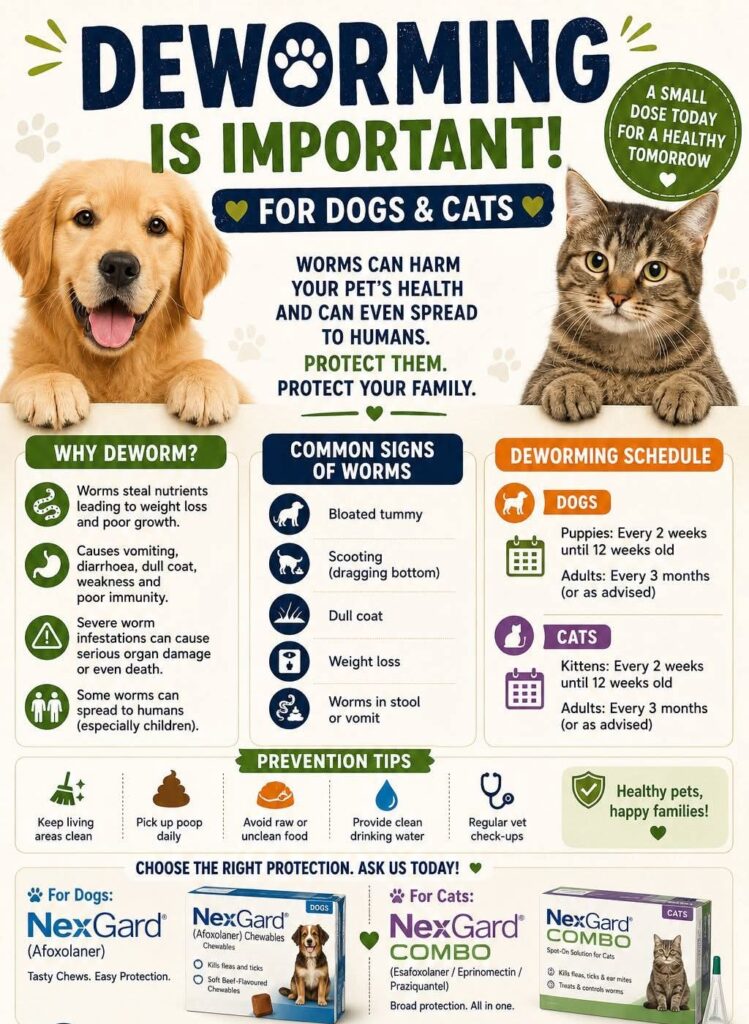

The Importance of Deworming Dogs: Protecting Your Pet, Family & Home
If you love your dog, regular deworming should be an essential part of their health routine. Internal parasites are common in puppies and adult dogs, and many infected dogs show no obvious symptoms until the infestation becomes serious. Deworming helps protect your dog, your family, and your home environment.
At FurBuddies, we always encourage proactive care—because prevention is easier, safer, and often more affordable than treatment.
Why Deworming Dogs Is So Important
Dogs can pick up worms from:
- Contaminated soil
- Infected faeces
- Fleas
- Rodents or prey animals
- Stagnant water
- Their mother before birth or through nursing
Common worms in dogs include:
- Roundworms
- Hookworms
- Whipworms
- Tapeworms
Worms steal nutrients, irritate the digestive system, cause weight loss, diarrhoea, anaemia, and can lead to serious illness if left untreated.
Some parasites can also affect humans, especially children.
Signs Your Dog May Have Worms
Many dogs show no symptoms, but warning signs can include:
- Bloated belly
- Weight loss
- Scooting
- Vomiting
- Diarrhoea
- Worms visible in stool
- Low energy
- Dull coat
- Poor appetite
If your dog shows any of these symptoms, speak to your veterinarian.
Puppy Deworming Schedule
Puppies are especially vulnerable to worms.
A common schedule is:
- 2 weeks old
- Every 2 weeks until 12 weeks
- Monthly until 6 months
- Then move to adult maintenance schedule
Always confirm the best schedule with your vet.
How Often Should Adult Dogs Be Dewormed?
Many adult dogs benefit from deworming every 3 months, but this depends on:
- Lifestyle
- Contact with other dogs
- Beach or park visits
- Hunting/scavenging habits
- Flea exposure
- Presence of children in the household
Your vet may recommend a more frequent schedule depending on risk.
For more veterinary-backed information:
- American Kennel Club Deworming Dogs Guide
- WebMD Deworming Dogs and Puppies
- Chewy Vet Guide to Deworming Puppies
Why the Whole Household Should Be Dewormed
This is an often-overlooked but very important point.
If one pet in the home has worms, there is a chance parasite eggs or larvae may already be in the environment. In multi-pet households, it is often sensible to deworm all pets at the same time to reduce reinfection cycles.
In some cases, veterinarians or healthcare professionals may also recommend that human family members seek medical advice regarding deworming, especially if:
- Young children live in the home
- There has been repeated parasite infection
- Hygiene concerns exist
- Zoonotic parasites are suspected
Always consult your vet for pets and doctor/pharmacist for humans.
How to Prevent Worms in Dogs
1. Pick Up Poop Quickly
Reduces spread of parasite eggs.
2. Keep Fleas Under Control
Tapeworms are commonly spread by fleas. Karbadust is a safe option to use on floors and rugs for killing fleas indoors, and lawns and gardens outdoors.
3. Stop Scavenging
Prevent eating faeces, rubbish, or dead animals.
4. Fresh Clean Water Only
Avoid puddles and stagnant water.
5. Regular Vet Checks
Routine faecal tests can detect hidden parasites.
6. Stay on a Deworming Schedule
Consistency is key.
Cape Town Dog Owners: Higher Exposure Areas
Dogs visiting:
- Beaches
- Leadville Dog Park Sunningdale
- Shared walking paths, like POS’s or Public Open Spaces which we’re spoilt with in Cape Town (i.e. Greenbelts)
- Training classes
- Dog daycare
- Busy public areas
may have increased exposure to parasites. Preventative care matters.
Why Healthy Dogs Behave Better
Parasites can cause discomfort, which may lead to:
- Irritability
- Lethargy
- Poor focus
- Food guarding
- Reduced trainability
A comfortable dog is often a happier, more responsive dog.
Need Help Raising a Healthy, Happy Dog?
At FurBuddies, we help dog owners with puppy guidance, behaviour support, training foundations and practical real-world advice.
👉 Visit www.furbuddies.co.za