
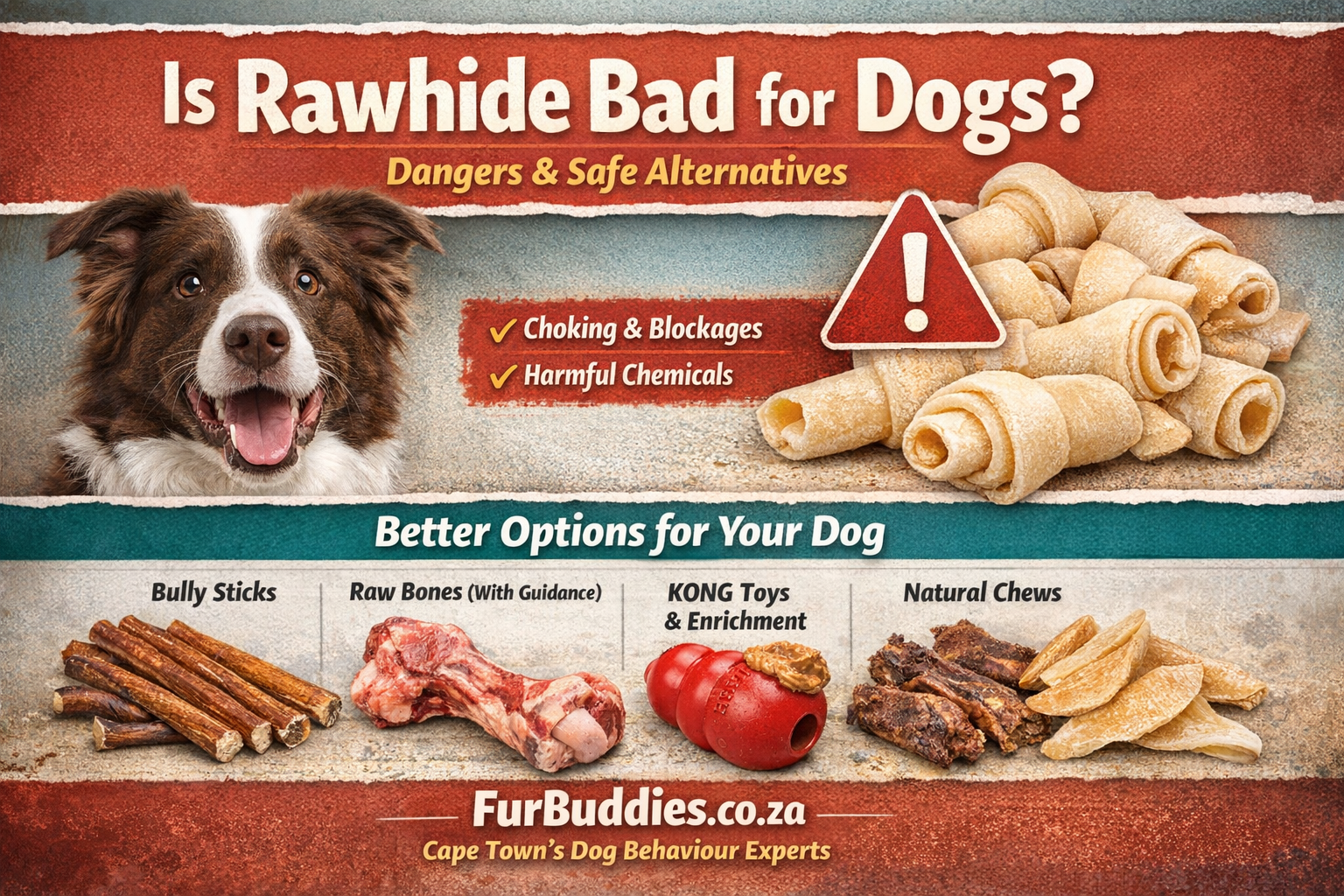
Rawhide chews and toys are bad for Dogs. Learn about the Dangers + Safe Alternatives (Vet & Trainer Advice)
If you’ve ever walked down a pet store aisle, you’ve seen rawhide chews everywhere. They’re marketed as long-lasting, satisfying treats that keep dogs busy and help clean teeth.
But here’s the truth: rawhide can pose serious risks to your dog’s health and behaviour.
At FurBuddies, we regularly work with dogs who develop digestive issues, resource guarding, or even medical emergencies linked to inappropriate chew items—rawhide being one of the biggest culprits.
Let’s break down why rawhide isn’t worth the risk—and what you should choose instead.
What Is Rawhide?
Rawhide is made from the inner layer of cow or horse hides, a byproduct of the leather industry. To turn it into those white chews, the hides go through heavy processing, including:
- Chemical treatments (lime, bleach, preservatives)
- Gluing and shaping into bones or rolls
- Drying and flavouring
By the time it reaches your dog, it’s far from a natural product.
The Risks of Rawhide for Dogs
1. Choking Hazard
As your dog chews, rawhide softens and breaks into large, slimy chunks. These can easily:
- Get stuck in the throat
- Block the airway
- Require emergency intervention
This is especially dangerous for enthusiastic chewers.
2. Digestive Blockages
Unlike natural chews, rawhide is difficult to digest.
If swallowed, pieces can:
- Sit in the stomach without breaking down
- Cause intestinal blockages
- Lead to vomiting, lethargy, or worse—surgery
3. Chemical Exposure
Because rawhide is heavily processed, it may contain:
- Residual chemicals
- Artificial flavourings
- Preservatives
Not something you want your dog chewing (and swallowing) regularly.
4. Encourages Resource Guarding
Rawhide is highly palatable and long-lasting—which sounds great, but often leads to:
- Dogs becoming possessive over the chew
- Growling or snapping when approached
- Escalation into behavioural issues
This is something we frequently help clients address in our behavioural sessions.
So… What Should You Give Your Dog Instead?
The goal is simple: safe, digestible, and mentally enriching chews.
Here are better alternatives we recommend at FurBuddies:
✔️ Natural, Digestible Chews
- Bully sticks (pizzle sticks)
- Dried beef tendons
- Lamb ears or cow ears (with no additives)
These are far easier to digest and don’t break into dangerous chunks.
✔️ Raw Bones (With Guidance)
- Large raw bones (never cooked!) can be great for:
- Mental stimulation
- Dental health
⚠️ Always supervise and choose the right size for your dog.
✔️ Durable Rubber Chews
- KONG-style toys
- Fillable enrichment toys
Perfect for stuffing with:
- Peanut butter (xylitol-free)
- Plain yogurt
- Dog-safe treats
These help reduce boredom and destructive behaviour.
✔️ Dental Chews (Vet-Approved)
Look for:
- Scientifically tested options
- Easily digestible formulas
- No harsh chemicals
A Training Perspective: Why Chewing Matters
Chewing isn’t just about keeping your dog busy—it’s essential for:
- Stress relief
- Mental stimulation
- Preventing destructive behaviour
But giving the wrong chew (like rawhide) can actually create more problems than it solves.
How FurBuddies Can Help
If your dog:
- Guards chews or food
- Swallows things too quickly
- Destroys toys or struggles to settle
We can help you build safe chewing habits through:
Download Your FREE Safe Chew Guide:
👉 Get in touch with us to learn how we can support you and your dog.
Final Thoughts
Rawhide might be cheap and convenient—but it comes with risks that simply aren’t worth it.
Choosing safer alternatives doesn’t just protect your dog’s health—it also supports better behaviour, calmer energy, and a happier home.
Rawhide FAQ’s
Is rawhide ever safe for dogs?
No—due to choking and digestion risks, safer alternatives are recommended.
What is the safest chew for dogs?
Natural chews like bully sticks or vet-approved dental chews are safer.
Can rawhide cause blockage?
Yes—rawhide can swell and block the digestive tract.
Disclaimer: FurBuddies advice is provided to guide and assist you with your dog. Always consult your Vet first.