
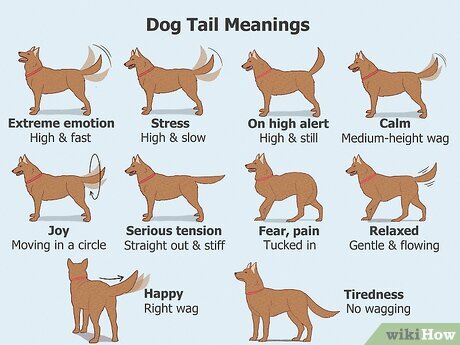
What Your Dog Is Telling You: Understanding Tail Communication
If dogs could talk, life would be much simpler — but the truth is, they are constantly communicating with us. One of the most expressive parts of your dog’s body is their tail. Learning to read your dog’s tail language can help you better understand their emotions, prevent unwanted behaviour, and build a stronger bond.
At FurBuddies, we believe that understanding your dog is the foundation of effective, positive training.
Why Tail Language Matters
A wagging tail doesn’t always mean a happy dog. In fact, tail movement, position, and speed all play a role in what your dog is trying to communicate. Misreading these signals can lead to stressful or even dangerous situations — especially when introducing dogs to new people, children, or other animals.
Let’s break it down.
Common Tail Positions and What They Mean
🐕 High and Stiff Tail
A tail held high and rigid often signals alertness or tension. Your dog may be feeling dominant, unsure, or even preparing to react.
👉 What to do: Give your dog space and assess the environment. Avoid forcing interactions.
🐕 Tail Wagging High and Fast
This can indicate excitement, but it may also signal overstimulation or agitation.
👉 What to do: Look at the rest of the body — stiff posture or intense staring can mean this is not friendly excitement.
🐕 Neutral, Relaxed Wag
A tail at a natural height with a gentle wag usually means your dog is comfortable and content.
👉 What to do: This is a great time for interaction, training, or play.
🐕 Low Tail Wag
A lower tail wag can indicate uncertainty or submission.
👉 What to do: Offer reassurance and avoid overwhelming your dog.
🐕 Tucked Tail
A tail tucked tightly between the legs is a clear sign of fear, anxiety, or stress.
👉 What to do: Remove your dog from the situation and create a calm, safe space.
🐕 Slow Wag
A slow, deliberate wag can signal uncertainty or caution.
👉 What to do: Allow your dog time to assess the situation — don’t rush them.
It’s Not Just the Tail — Look at the Whole Dog
While the tail is a powerful communication tool, it should never be read in isolation. Always consider:
- Ear position
- Eye contact
- Body posture
- Vocalisations
For example, a wagging tail combined with a stiff body and hard stare may indicate tension, not friendliness.
How Understanding Tail Language Helps Training
At FurBuddies, we use positive reinforcement training to build trust and confidence. When you can read your dog’s signals early, you can:
- Prevent unwanted behaviours before they escalate
- Reinforce calm, confident behaviour
- Reduce fear and anxiety
- Improve socialisation experiences
Understanding your dog’s tail language allows you to respond appropriately, rather than react after the fact.
Real-Life Example
Imagine your dog at Leadville Dog Park. Their tail is high and wagging quickly, but their body is stiff and they’re fixated on another dog.
This isn’t playful energy — it’s tension.
By recognising this early, you can redirect your dog, create distance, and avoid a negative interaction.
Final Thoughts
Your dog is always communicating — the question is, are we listening?
By learning to read your dog’s tail (and overall body language), you’ll create a safer, more positive environment for both your dog and those around them.
At FurBuddies, we’re here to help you better understand your dog and build a relationship based on trust, communication, and positive reinforcement.
Need Help Understanding Your Dog?
If you’re unsure about your dog’s behaviour or want to improve communication, we’re here to help.
Get in touch with FurBuddies today to learn more about our training sessions and socialisation support.
Always pay attention to your dogs body language. Another example is how they respond to patting